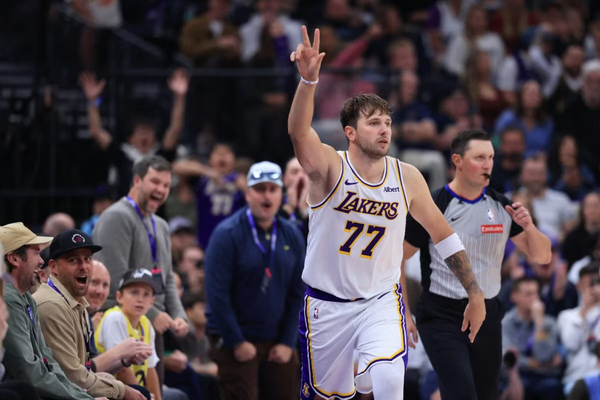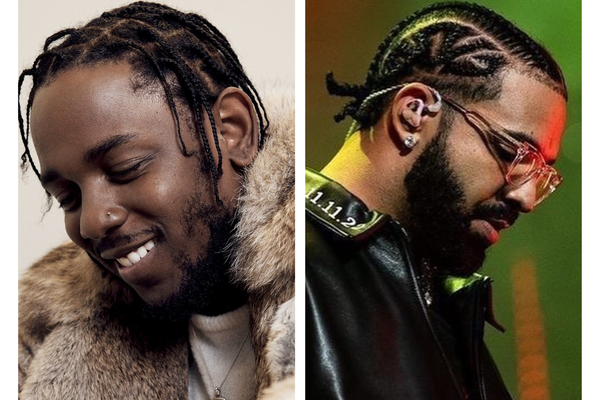
The rapper claims Spotify helped UMG boost Kendrick's "Not Like Us," but Spotify now says the action is a "subversion" of the legal system and never should have been filed.
Spotify is firing back at Drake’s accusations that the streamer helped Universal Music Group artificially boost Kendrick Lamar’s “Not Like Us,” calling the allegations “false” and blasting the rapper’s legal action as a “subversion of the normal judicial process.”
The new filing is the first response to a petition filed last month in which Drake accused UMG and Spotify of an illegal “scheme” involving bots, payola and other methods to pump up Lamar’s song — a track that savagely attacked Drake amid an ongoing feud between the two stars.
In a motion filed Friday in Manhattan court, the streaming giant says it has found zero evidence to support the claims of a bot attack, and flatly denies that it struck any deal with UMG to support Lamar’s song.
“The predicate of Petitioner’s entire request for discovery from Spotify is false,” the company’s lawyers write. “Spotify and UMG have never had any such arrangement.”
Beyond denying the allegations, the filing repeatedly criticizes Drake for going to court in the first place — calling his claims of a conspiracy “far-fetched” and “speculative,” and questioning why Spotify (a “stranger” to the “long-running fued” between Drake, Kendrick and UMG) is even involved.
Spotify also criticized Drake for the way in which he brought his claims to court — not as a full-fledged lawsuit, but as an unusual “pre-action” petition aimed at demanding information. The company accused Drake of using that “extraordinary” procedure because his allegations are too flimsy to pass muster in an actual lawsuit and would have been quickly dismissed.
“What petitioner is seeking to do here … is to bypass the normal pleading requirements … and obtain by way of pre-action discovery that which it would only be entitled to seek were it to survive a motion to dismiss,” Spotify’s lawyers write. “This subversion of the normal judicial process should be rejected.”
A spokesperson for Drake and his legal team did not immediately return a request for comment on Spotify’s filings.
Drake went to court last month, accusing UMG of violating the Racketeer Influenced and Corrupt Organizations Act, the federal “RICO” statute often used against organized crime. He accused Spotify of participating in the scheme by charging reduced licensing fees in exchange for recommending the song to users. A day later, he filed a similar action in Texas, suggesting that UMG had legally defamed him by releasing a song that “falsely” accused him of being a “sex offender.”
The legal actions represent a remarkable twist in the high-profile beef between the two stars, which saw Drake and Lamar exchange stinging diss tracks over a period of months earlier this year. That a rapper would take such a dispute to court seemed almost unthinkable at the time, and Drake has been ridiculed in some corners of the hip-hop world for doing so.
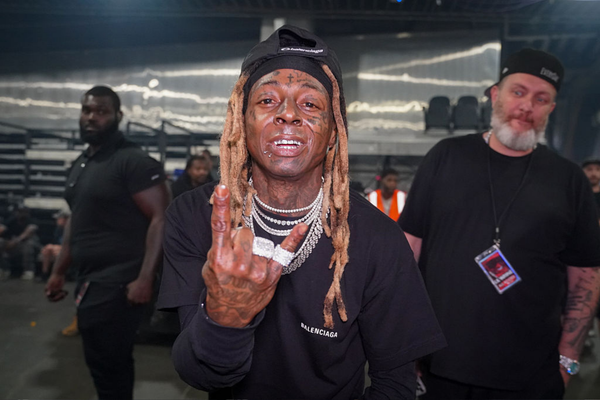
The actions also represent a stunning rift between Drake and UMG, where the star has spent his entire career — first through signing a deal with Lil Wayne’s Young Money imprint, which was distributed by Republic Records, then by signing directly to Republic.
UMG has not yet filed a responded to the litigation in court. But in a statement issued at the time, the music giant called Drake’s allegations “offensive and untrue”: “No amount of contrived and absurd legal arguments in this pre-action submission can mask the fact that fans choose the music they want to hear.”
In Friday’s filing, Spotify echoed that criticism — arguing that civil RICO cases are difficult to prove even with ample evidence, and that Drake hardly has any: “The Petition asserts no specific facts of any kind in support of these alleged RICO and deceptive practices violations,” the company wrote. “Instead, it relies exclusively on speculation … or the claims of anonymous individuals on the internet.”
Spotify’s attorneys seemed particularly focused on disputing the idea that swarms of bots had been able to flood the platforms to fraudulently boost Lamar’s track — a hot-button issue in the modern music industry. In an affidavit attached to Friday’s filing, Spotify’s vp of music offered sworn testimony that the company “invests heavily” in efforts to “mitigate the impact of artificial streaming on our platform.”
“When we identify attempted stream manipulation, we take action that may include removing streaming numbers, withholding royalties and charging penalty fees,” David Kaefer wrote in the filing. “Confirmed and suspected artificial streams are also removed from our chart calculations. This helps us to protect royalty payouts for honest, hardworking artists.”